Mostrando entradas con la etiqueta Topics. Mostrar todas las entradas

viernes, 3 de agosto de 2012

Trending Topics Extra: Let’s not worry about CBA talks

API am at peace with the idea of a lockout.

I should say first that I don't want a lockout to happen, obviously. But I honestly don't think there will even be one. And if there is one, I'm okay with it, because I don't think anyone is stupid enough to let it last for more than a few weeks.

The reason for my steadfast belief in this is simple. You can probably say a lot of things about the either side of the aisle in this tête-à-tête — they're greedy, they're power-hungry, they're looking only for what's fair, they're trying to increase their share of the pie — but one thing they're definitely not is stupid.

Yes, the owners' initial offer to the Players' Association was an insult and no grounds at all for any kind of labor peace but they also know what's ultimately at stake here. No one benefits from a lengthy lockout, or indeed, any amount of work stoppage because everyone is currently doing great.

The salary cap has pretty much exploded to nearly double its original post-lockout number, meaning that hockey-related revenues have done so as well. Hockey-related revenues also don't include a whole bunch of things that owners make money on as a result of running hockey teams. No one is getting clobbered here, as they were prior to the 2004-05 lockout, when the lack of a salary cap allowed big market teams to spend an insane amount of money on whatever players they wanted and small-market teams were left scratching in the dirt with the meager few talented players they drafted and not much else.

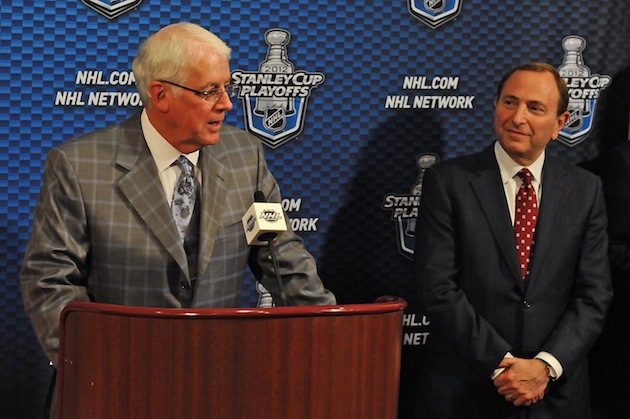
As Charles Pierce presciently pointed out a week or so ago, what the owners want more than anything is the ability to say they broke the players' backs in yet another collective bargaining agreement. Nothing more, nothing less.

That kind of pre-lockout inequity is, to an extent, rearing its head once again, though, and that could throw a lot of things into chaos. Ownership also seems not to be nearly as strong in its unity because the current revenue sharing system (hey! Revenue again!) can't begin to make sense for anyone involved except — you guessed it — the top teams, who simply know they're going to end up losing some amount to it. Your Maple Leafs, your Rangers, your Flyers, your Red Wings, your Bruins. These teams make boatloads of money and kick that down to a smaller number of teams that largely do not, and it probably won't surprise you to learn that it's a few of these richer teams' owners are reportedly the ones trying to bludgeon the NHLPA into taking that bad first deal they offered. Meanwhile, poorer teams are still left wondering what, exactly, becomes of their revenue sharing money.

Hawks in ownership aside, though, the Players' Association simply isn't the kind of mewling mess it was last time around. They came prepared to play hardball by taking up Donald Fehr on his "Shut up and let me handle this," proposal, and Fehr isn't a man to get bullied in labor negotiations. Arguably the strongest players' union in North American professional sports is that of Major League Baseball, and it's no coincidence that Fehr is largely the architect thereof. He's not going to get bullied by anyone sitting across from him. He is a bit of an old hand at this.

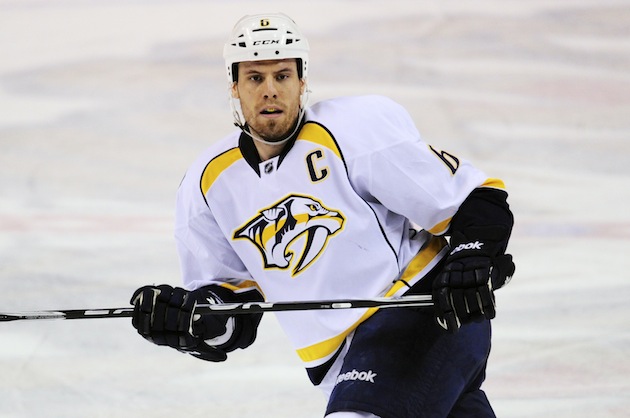
The NHLPA's counter-proposal is expected to come at some point this week as long as they can get a closer look at some teams' financials (and, by the time you read this, may have already done so). The simplest proposal is pretty clear: Stick with this basic CBA, at least for a little while. That's an option that some have hinted at being possible, and would give everyone a significant amount of time to work toward a more workable long-term solution. Again, no one's taking some sort of big hit under the current system — ask Shea Weber, Ryan Suter and Zach Parise, who all signed jumbo deals agreed to by actual small-market NHL owners — and therefore it must be doing something in a way that all sides find agreeable.

Now, it should be pointed out that lots of people think Weber locked in his massive contract, with its huge bonuses in the first two years, this summer so that he would not be at the mercy of whatever CBA is eventually agreed upon by next summer, when he would have been an unrestricted free agent. That shows a little bit of pessimism as far as a salary rollback is concerned, and possibly also that those owners didn't think they'd have to dole out nearly as much money as the initial contract stated. But nonetheless, this is huge money being tossed around, with huge commitments from players.

We know the current CBA works. It vindicates Bettman's plans for the league, and it's getting players both great and less so paid. I understand this is the National Hockey League we're talking about, but I'm going to say this next sentence anyway: Logic has to win out. Why blow everything up? Why risk that much uncertainty? There are hundreds of millions of dollars at stake and that's impossible to look past because this is a business.

But everyone is getting rich already. With a season at stake, or even part of one, allowing that to continue in lieu of another lamentable, counterproductive work stoppage, during which no one makes money, is extraordinarily sensible.

Maybe I'm asking too much in hoping that both the league and the union err on the side of reason and continual money-making, but I firmly believe that a bunch of businessmen can figure it out.

Ryan Lambert is a columnist for Puck Daddy. Follow him on Twitter or whatever.

Quick, fire Scott Howson before he screws something else up (Trending Topics Extra)

Getty ImagesThe long-awaited Rick Nash trade finally came down on Monday and it turned out that Scott Howson got a decent enough return for his face-of-the-franchise former Rocket Richard winner.

Of course, he was lambasted for it. Part of that is because it's really easy and kind of required by custom to trash anything he does. The simple fact is he managed an NHL team that had designs on making the playoffs for years to come — see what he gave up in the Jeff Carter trade and the ridiculous contract for James Wisniewski as evidence thereof — into the ground in just over a calendar year. No Jeff Carter, no Rick Nash, no hope of being good in the next few seasons.

The cries for his job that have been echoing around Columbus and in fact the entire league didn't get much quieter as a result of the four "ifs" he acquired for Nash. Granted, Howson was constrained significantly by Nash's ability to dictate the teams to which he could be dealt, but nonetheless, this was not a good day at the ballpark by the GM's own definition. He wanted a home run. He got a solid double to the gap that plated a pair.

But at the same time, Howson may have also built a fairly decent young roster that, while it probably won't be able to win much more than 30 or so games this season, could actually be half decent in a few years. Whether this was an accident is, one supposes, up for interpretation. Nonetheless, guys like Brandon Dubinsky, Cam Atkinson, Derick Brassard, Ryan Johansen, Artem Anisimov, Nikita Nikitin, Tim Erixon, Ryan Murray, David Savard, Jack Johnson, Allen York, and so forth are all decent enough players and all could, approximately, be called young. This isn't anything world-beating by any stretch of the imagination but it is, at least, something to start with.

And that's why they have to fire Scott Howson immediately.

There were a few reports after that whole disaster last season that Howson wouldn't be fired by Columbus' higher-ups, likely in the same way judges on courtroom dramas say "I want to see where he's going with this," as counsel goes spectacularly off the rails with a witness. Howson has somehow been given the chance to dig himself out from this mess he created all by himself, but it wouldn't be all that surprising to see him bash himself in the face with the shovel a few times before really getting after it in earnest.

Having colossally screwed even the slightest attempt at "going for it," to use Jay Feaster's favorite term, Howson can't have the keys going forward. Case in point: He got Los Angeles' first-round pick in 2013 along with Jack Johnson in exchange for Jeff Carter — not the best trade-off considering what he gave up just months earlier — but rumors over the weekend said he could be required to ship that back to the Kings if a trade for Jonathan Bernier were to come to fruition.

This is, of course, after saying that he was content to enter the season with Steve Mason and Sergei Bobrovsky as his goaltenders. That in itself shows he has a complete lack of judgment on the subject of what is an acceptable goaltending tandem, as if last year's faith in Mason wasn't enough evidence. But to then throw away a pick on an unproven netminder like Bernier, whose even-strength save percentage last season was an appalling .901 (worse than Jonas Gustavsson's) on an appreciably better team.

In no way should this man be allowed to oversee a worst-in-the-league team's efforts at even a modest rebuild. He's been running the Blue Jackets since 2007, when Doug MacLean got the axe, and in that time made the postseason with a team he largely inherited thanks to a freakishly good and as-it-turns-out uncharacteristic start from Mason, then a rookie. Since then, well, it hasn't gone well. Five fifth-place finishes in a division that is, admittedly, not easy to win against. But more to the point, has gotten actively worse in that time.

What's more, prior to this latest draft, Hockey's Future had the Blue Jackets' system ranked a stunning 29th out of 30, ahead of only the San Jose Sharks. Of course, that's probably because the latter team picked in the top 15 just once since 2006, thanks to all that winning they've been doing. Columbus, well, their best season in that time (okay, ever) saw them earn a whopping 92 points.

Repeatedly awful team? Bad drafting? Howson is, to put it nicely, demonstrably bad at his job. This was his chance to make up ground against those who would nay-say his efforts, which is to say "everyone."

He turned down Rangers offers at the deadline and draft that were arguably better than the one he eventually settled for (the sticking point being whether you prefer Artem Anisimov to a pair of prospects) and took on money to offload his franchise's only good player ever. This after basically asking for the moon in all negotiations, which he was more than happy to make extraordinarily public. No one would think he got ripped off in the Nash deal if he hadn't done that, and even when the Rangers were desperate to get the star winger over fears that Shea Weber could be smothering their forwards for the next 14 years, he failed to command any kind of better return.

There's simply no clear indication of the plan Howson has in mind. He's clearly happy to roll a top-six next season of R.J. Umberger, Brassard, Atkinson, Vinny Prospal, Anisimov and Dubinsky. That is, somehow, a worse top-six than Calgary rolled last year, and the Flames actually had a good goaltender behind them. His insistence on obtaining NHL talent — hence his decision to nix the earlier Ranger offers — seems ill-founded.

That's the reason you can't let him clean up his own mess. It's impossible to guess either if or when he'll trade one of his team's few decent prospects and a lottery pick for Ales Hemsky, but really, do you want to take that chance? Worse things have already happened.

Ryan Lambert is a columnist for Puck Daddy. Follow him on Twitter or whatever.

Trending Topics: Let’s make offer sheets a regular thing

Getty ImagesTrending Topics is a column that looks at the week in hockey, occasionally according to Twitter. If you're only going to comment to say how stupid Twitter is, why not just go have a good cry for the slow, sad death of your dear internet instead?

It's been a long time since an offer sheet was both advanced and accepted in the NHL.

More than two years, to be exact. Shea Weber accepted Philadelphia's 10-year offer sheet two years and 10 days after the Sharks signed Niklas Hjalmarsson to one worth four years and $14 million. The Blackhawks matched that and, shockingly, are now desperately trying to get out from under it.

In fact, for all the talk about offer sheets we see every summer — "why didn't Steven Stamkos get, like, 29 of them?" and so forth — only two have been accepted since 1997, and just 11 have been extended. Two out of 11 in 15 years, and we act as if these are some sort of scourge around the league.

Make no mistake, though: The lack of offer sheets over the last decade and a half is entirely the result of what must be a tacit agreement among the league's general managers to generally not extend them despite these provisions being built into the collective bargaining agreement. It artifically depresses players' earning power and makes sure that guys stay with their teams. Now, from an organizational perspective, that's a good thing. You can build around and market young stars and keep them for long periods of time without the threat of them jumping to a rival team. But it also, as Gary Bettman would say, "violates the spirit" of the CBA.

The failure of GMs to use offer sheets can be traced back to Kevin Lowe giving out two very silly ones — to Tom Vanek and Dustin Penner — the summer after the lockout, and Brian Burke's barn-fightin' reaction to it. The latter's argument that these efforts eliminated something that used to be known as the "second contract" in the NHL (that is, the post-entry-level deal that was a sort of stepping stone to big money later in their careers) is certainly credible, but that in itself seems inherently unfair to players who should be paid what they're worth.

What the Weber situation ultimately taught us is that offer sheets are, at their heart, pretty fun to watch. A week of fretting and what-if scenarios, fraught with schandenfreude, all because a player had the temerity to sign a deal with a team willing to pay him what he was worth, because he thought the organization for which he was currently playing wouldn't be willing to do so. He was wrong (and according to his agent, that much to his chagrin), but hey, that's how the CBA is supposed to work.

Honestly, the league would be much better, and the summers considerably more fun, if offer sheets were a regular thing, and not a reason for some GMs to stomp up and down and threaten each other with physical violence. I follow the NBA as little as humanly possible but seem to recall there being more than a few offer sheets extended to restricted free agents, including the Houston Rockets signing the New York Knicks' ultra-popular Jeremy Lin. And Rockets GM Daryl Morey didn't even have to go 138 bare-knuckle rounds with Knicks GM Glen Grunwald in an abandoned grain silo. What wonders the NBA holds.

My hope was that, as with the retaliatory offer sheet St. Louis gave to Steve Bernier after Vancouver tried to sign David Backes to one, the Predators would try to take down the Flyers' remaining impact RFA (Jakub Voracek) with a similar deal, but it didn't happen. Not that Paul Holmgren didn't go ahead and give his guy a little too much money anyway, but that's how things seem to go in Philadelphia.

Even with Voracek locked up for the next four years, there still remains a number of high-quality restricted free agents that are as yet unsigned by their teams. Do you think your favorite team would like a guy like Jamie Benn? John Carlson? P.K. Subban? Ryan O'Reilly? Michael Del Zotto? Evander Kane? They're all right there for the taking. All it will cost your team is cash, cap space and draft picks. Probably a few high ones.

But the likelihood that any of those picks pan out to be as good as any of those players is low. That's why Philadelphia was willing to give up four probably-late first-round picks for Weber, who's the best defenseman of his generation. It's certainty rather than taking a guy for what has been called "the premise of promise." When you're running a hockey team, that's a good thing.

Give Holmgren and Ed Snider this: They'll do whatever it takes, and use whatever is available to them, to improve their team. That's something most GMs can't say.

Of course, the argument against this is that small-market teams likely wouldn't be able to keep guys they drafted and cultivated. It's too bad about that, but then the only small-market team the league is actually required to keep afloat is the Coyotes. This kind of thing is why revenue sharing exists. Burke runs a team that more or less prints its own money simply by existing, and is so morally opposed to the idea of offer sheets that he won't use them even if he can afford to give them out.

There should be a line out the door and around the block for guys like Benn and Carlson and Kane and O'Reilly and Subban and Del Zotto. They're high-quality young talents who will only continue to improve, who can likely be had for relatively short money when compared to guys like Ryan Suter, Alex Semin and Shane Doan. The only reason no one has attempted to sign them is because they've all more or less agreed not to do that kind of thing.

It would be great, really and truly great, if all the above RFAs got offer sheets — plural — in the final few weeks before the season. Do what Philly did with Weber: Give the guy a little financial security ahead of a potential work stoppage and almost-certain change to salary structure league-wide, and watch him become a real player for you over the next few years. Bonus points if all your RFAs are locked up for a few years.

It makes too much sense to not do it. Teams will do all in their power to be competitive, except this one thing. But it's to hockey's and, more importantly for the GMs, their organizations' detriment that they don't.

Jim Rutherford plays it safe

All the credit in the world to Hurricanes GM Jim Rutherford for signing Alex Semin and instantly giving his team considerably more credibility when it comes to actually competing for a playoff spot.

This was a summer in which Rutherford and the 'Canes got real serious about being good again after missing the playoffs for the third straight year and finishing fifth in the division for the first time since 2003. Signing Semin on a reasonable $7 million, one-year deal was just a brilliant move.

People will argue that $7 million is too much for a coach-killing, lazy dressing-room cancer, but it's not. As of that signing, the Hurricanes took a huge jump forward in cap money committed to players for next season: all the way to 17th. They could have paid him $10 million and still been outside the top 12.

But what was really brilliant wasn't that they signed him — which, again, was brilliant — but rather that he signed him to a one-year deal. There was rampant speculation that Semin was only interested in signing a multi-year contract for big money, and while he got the big money, that first part didn't come to pass. Why?

Because Semin seemingly wanted to stay in the NHL, and more importantly because of this quote: "We would look at Semin on a short-term basis. We wouldn't want to get locked in to anything, because we've all heard the stories about him. We do like his skill level. It could be that we could bring him in for a year, get to know him and go from there in terms of considering something longer term."

Despite being the only team to publicly express the slightest interest in Semin's services, and despite his reportedly having a massive offer from the KHL, Rutherford succeeded simply by playing coy. Negotiating against no one, he signed one of the best forwards available this summer in late July to exactly the terms he wanted. That's brilliant.

Pearls of Biz-dom

We all know that there isn't a better Twitter account out there than that of Paul Bissonnette. So why not find his best bit of advice on love, life and lappers from the last week?

BizNasty on fiscal responsibility: "Owners want 25% roll back on salaries but are handing out 100 million dollar deals like it's going out of style. Figure that one out."

If you've got something for Trending Topics, holla at Lambert on Twitter or via e-mail. He'll even credit you so you get a thousand followers in one day and you'll become the most popular person on the Internet! You can also visit his blog

What do you mean the Coyotes bidders don’t have the money? (Trending Topics)

Getty ImagesTrending Topics is a column that looks at the week in hockey, occasionally according to Twitter. If you're only going to comment to say how stupid Twitter is, why not just go have a good cry for the slow, sad death of your dear internet instead?

We've heard a lot this summer about how Shane Doan's re-signing with the Phoenix Coyotes was contingent upon the security of the team and its finances, which was apparently where Greg Jamison came in.

You remember Jamison. Former president and CEO of the San Jose Sharks who, in 2002, swooped in with a bunch of investors and saved them from hemorrhaging money and made them a successful franchise, who has, of late, been the most recent in a line of interested parties for these Coyotes.

It all seemed very strange from the start. Jamison is the face of a rather shadowy group of which zero members have been unveiled, nor where their or his money is coming from. Don't worry though, during the Coyotes' run to the Western Conference Final, we were told this was because they didn't want to overshadow the team's somewhat surprising postseason success. And yet, here we are in early August, with the Coyotes' Western Conference Final opponents having lifted the Stanley Cup, and yet, we continue to hear nothing.

Doan, the face of this struggling, bankrupt, league-run franchise, is actively and rather publically taking meetings with the various teams who have expressed an interest in his 35-year-old services. This despite twice extending his deadline to receive assurances from Jamison's group that the sale is moving along and could be resolved in the near future, petitions, threatened lawsuits from conservative thinktanks, and blah blah blah.

It's all becoming very, very easy to get bogged down in the details of a pending deal that Gary Bettman said could be resolved in "weeks as opposed to months" on May 7. And still we have no answers.

The reason for this, it turns out, is that Jamison, as many suspected all along, doesn't quite seem to have the scratch together right now. The league wants $170 million for the Coyotes (meanwhile someone just bought the Cleveland Browns for a whopping $1 billion which seems crazy to me but then I don't care about football), and Jamison apparently only has $150 million shored up. Which creates a terribly interesting problem: He needs the money to buy the team, and not only that, but to then pay Doan whatever ransom the captain demands. But he needs Doan to instill confidence in potential investors, and he can't get Doan without moving toward finalizing the sale, except that… well, you get the picture.

A mess in the desert? An uncertain ownership situation despite a multitude of assurances from the league that this time, the guy they're pushing as the new owner of the Coyotes is really and truly going to actually be able to buy the team? Gosh, where have we heard that before?

It's enough to make one wonder exactly how much of a stomach anyone besides Gary Bettman has for this? The grandiose dream of a team succeeding in Phoenix despite not actually being in Phoenix has turned out to be an even grander illusion, as the league props up a cavalcade of unsuitable suitors as saviors to an ineffible end.

Of course, it remains to be seen where this missing $20 million — a pretty sizable portion of a $170 million bid — comes from, if it comes at all, and whether it'll be too late to keep Doan in brick red and desert sand. And it's still unclear whether, if Jamison can even get that money to complete the sale, where he'll get the money to actually operate the hockey team. The league is apparently so willing to sell the team to Jamison, even at a loss, that it might be willing to "help Jamison's bid with some creative financing" and hope he can raise operating costs after locking up the team, presumably because investors would then find it more attractive.

What a disaster. So many hurdles cleared in the last few months alone to get this done and the latest liberator still needs help getting the financing. We're told he has had the money in the past but had investors back out at the last minute. We're told Jamison himself has lost some money in the process. Basically, we're told a lot of things, all of which are designed to assuage concerns. This guy who doesn't have the money at least has a good reason for not having the money. Great. Very encouraging.

I just don't understand why any of this is a surprise. So many times we've now seen owners who don't have the cash or the interest or the wherewithal to buy this team propped up as a sign of hope, an oasis in this desert largely devoid of hockey interest.

Fans of the team, what few there are, are constantly being given hope only to have it snatched back from them by the fact that no one who wants to buy this team and keep it in Glendale is actually capable of doing so. And even if they are, as Matthew Hulsizer seemed to be, the amount of political crap they had to deal with proved to be too much to make buying a monetary black-hole worth the trouble.

Gary Bettman isn't one to admit defeat, that much we know. We can also, at this point, rest pretty safely in the knowledge that the team has nowhere to go any time soon unless someone wants to swoop in and move them to Kansas City about a month and a half before training camps are scheduled to convene. And so everyone — fans, players, coaches, management, owners, everyone — is stuck with the Coyotes, waiting for someone who might never come.

Pearls of Biz-dom

We all know that there isn't a better Twitter account out there than that of Paul Bissonnette. So why not find his best bit of advice on love, life and lappers from the last week?

BizNasty on big surprises: "August? WTF?"

If you've got something for Trending Topics, holla at Lambert on Twitter or via e-mail. He'll even credit you so you get a thousand followers in one day and you'll become the most popular person on the Internet! You can also visit his blog if you're so inclined.

What do you mean the Coyotes bidders don’t have the money? (Trending Topics)

Getty ImagesTrending Topics is a column that looks at the week in hockey, occasionally according to Twitter. If you're only going to comment to say how stupid Twitter is, why not just go have a good cry for the slow, sad death of your dear internet instead?

We've heard a lot this summer about how Shane Doan's re-signing with the Phoenix Coyotes was contingent upon the security of the team and its finances, which was apparently where Greg Jamison came in.

You remember Jamison. Former president and CEO of the San Jose Sharks who, in 2002, swooped in with a bunch of investors and saved them from hemorrhaging money and made them a successful franchise, who has, of late, been the most recent in a line of interested parties for these Coyotes.

It all seemed very strange from the start. Jamison is the face of a rather shadowy group of which zero members have been unveiled, nor where their or his money is coming from. Don't worry though, during the Coyotes' run to the Western Conference Final, we were told this was because they didn't want to overshadow the team's somewhat surprising postseason success. And yet, here we are in early August, with the Coyotes' Western Conference Final opponents having lifted the Stanley Cup, and yet, we continue to hear nothing.

Doan, the face of this struggling, bankrupt, league-run franchise, is actively and rather publically taking meetings with the various teams who have expressed an interest in his 35-year-old services. This despite twice extending his deadline to receive assurances from Jamison's group that the sale is moving along and could be resolved in the near future, petitions, threatened lawsuits from conservative thinktanks, and blah blah blah.

It's all becoming very, very easy to get bogged down in the details of a pending deal that Gary Bettman said could be resolved in "weeks as opposed to months" on May 7. And still we have no answers.

The reason for this, it turns out, is that Jamison, as many suspected all along, doesn't quite seem to have the scratch together right now. The league wants $170 million for the Coyotes (meanwhile someone just bought the Cleveland Browns for a whopping $1 billion which seems crazy to me but then I don't care about football), and Jamison apparently only has $150 million shored up. Which creates a terribly interesting problem: He needs the money to buy the team, and not only that, but to then pay Doan whatever ransom the captain demands. But he needs Doan to instill confidence in potential investors, and he can't get Doan without moving toward finalizing the sale, except that… well, you get the picture.

A mess in the desert? An uncertain ownership situation despite a multitude of assurances from the league that this time, the guy they're pushing as the new owner of the Coyotes is really and truly going to actually be able to buy the team? Gosh, where have we heard that before?

It's enough to make one wonder exactly how much of a stomach anyone besides Gary Bettman has for this? The grandiose dream of a team succeeding in Phoenix despite not actually being in Phoenix has turned out to be an even grander illusion, as the league props up a cavalcade of unsuitable suitors as saviors to an ineffible end.

Of course, it remains to be seen where this missing $20 million — a pretty sizable portion of a $170 million bid — comes from, if it comes at all, and whether it'll be too late to keep Doan in brick red and desert sand. And it's still unclear whether, if Jamison can even get that money to complete the sale, where he'll get the money to actually operate the hockey team. The league is apparently so willing to sell the team to Jamison, even at a loss, that it might be willing to "help Jamison's bid with some creative financing" and hope he can raise operating costs after locking up the team, presumably because investors would then find it more attractive.

What a disaster. So many hurdles cleared in the last few months alone to get this done and the latest liberator still needs help getting the financing. We're told he has had the money in the past but had investors back out at the last minute. We're told Jamison himself has lost some money in the process. Basically, we're told a lot of things, all of which are designed to assuage concerns. This guy who doesn't have the money at least has a good reason for not having the money. Great. Very encouraging.

I just don't understand why any of this is a surprise. So many times we've now seen owners who don't have the cash or the interest or the wherewithal to buy this team propped up as a sign of hope, an oasis in this desert largely devoid of hockey interest.

Fans of the team, what few there are, are constantly being given hope only to have it snatched back from them by the fact that no one who wants to buy this team and keep it in Glendale is actually capable of doing so. And even if they are, as Matthew Hulsizer seemed to be, the amount of political crap they had to deal with proved to be too much to make buying a monetary black-hole worth the trouble.

Gary Bettman isn't one to admit defeat, that much we know. We can also, at this point, rest pretty safely in the knowledge that the team has nowhere to go any time soon unless someone wants to swoop in and move them to Kansas City about a month and a half before training camps are scheduled to convene. And so everyone — fans, players, coaches, management, owners, everyone — is stuck with the Coyotes, waiting for someone who might never come.

Pearls of Biz-dom

We all know that there isn't a better Twitter account out there than that of Paul Bissonnette. So why not find his best bit of advice on love, life and lappers from the last week?

BizNasty on big surprises: "August? WTF?"

If you've got something for Trending Topics, holla at Lambert on Twitter or via e-mail. He'll even credit you so you get a thousand followers in one day and you'll become the most popular person on the Internet! You can also visit his blog if you're so inclined.

Trending Topics Extra: Let’s not worry about CBA talks

API am at peace with the idea of a lockout.

I should say first that I don't want a lockout to happen, obviously. But I honestly don't think there will even be one. And if there is one, I'm okay with it, because I don't think anyone is stupid enough to let it last for more than a few weeks.

The reason for my steadfast belief in this is simple. You can probably say a lot of things about the either side of the aisle in this tête-à-tête — they're greedy, they're power-hungry, they're looking only for what's fair, they're trying to increase their share of the pie — but one thing they're definitely not is stupid.

Yes, the owners' initial offer to the Players' Association was an insult and no grounds at all for any kind of labor peace but they also know what's ultimately at stake here. No one benefits from a lengthy lockout, or indeed, any amount of work stoppage because everyone is currently doing great.

The salary cap has pretty much exploded to nearly double its original post-lockout number, meaning that hockey-related revenues have done so as well. Hockey-related revenues also don't include a whole bunch of things that owners make money on as a result of running hockey teams. No one is getting clobbered here, as they were prior to the 2004-05 lockout, when the lack of a salary cap allowed big market teams to spend an insane amount of money on whatever players they wanted and small-market teams were left scratching in the dirt with the meager few talented players they drafted and not much else.

As Charles Pierce presciently pointed out a week or so ago, what the owners want more than anything is the ability to say they broke the players' backs in yet another collective bargaining agreement. Nothing more, nothing less.

That kind of pre-lockout inequity is, to an extent, rearing its head once again, though, and that could throw a lot of things into chaos. Ownership also seems not to be nearly as strong in its unity because the current revenue sharing system (hey! Revenue again!) can't begin to make sense for anyone involved except — you guessed it — the top teams, who simply know they're going to end up losing some amount to it. Your Maple Leafs, your Rangers, your Flyers, your Red Wings, your Bruins. These teams make boatloads of money and kick that down to a smaller number of teams that largely do not, and it probably won't surprise you to learn that it's a few of these richer teams' owners are reportedly the ones trying to bludgeon the NHLPA into taking that bad first deal they offered. Meanwhile, poorer teams are still left wondering what, exactly, becomes of their revenue sharing money.

Hawks in ownership aside, though, the Players' Association simply isn't the kind of mewling mess it was last time around. They came prepared to play hardball by taking up Donald Fehr on his "Shut up and let me handle this," proposal, and Fehr isn't a man to get bullied in labor negotiations. Arguably the strongest players' union in North American professional sports is that of Major League Baseball, and it's no coincidence that Fehr is largely the architect thereof. He's not going to get bullied by anyone sitting across from him. He is a bit of an old hand at this.

The NHLPA's counter-proposal is expected to come at some point this week as long as they can get a closer look at some teams' financials (and, by the time you read this, may have already done so). The simplest proposal is pretty clear: Stick with this basic CBA, at least for a little while. That's an option that some have hinted at being possible, and would give everyone a significant amount of time to work toward a more workable long-term solution. Again, no one's taking some sort of big hit under the current system — ask Shea Weber, Ryan Suter and Zach Parise, who all signed jumbo deals agreed to by actual small-market NHL owners — and therefore it must be doing something in a way that all sides find agreeable.

Now, it should be pointed out that lots of people think Weber locked in his massive contract, with its huge bonuses in the first two years, this summer so that he would not be at the mercy of whatever CBA is eventually agreed upon by next summer, when he would have been an unrestricted free agent. That shows a little bit of pessimism as far as a salary rollback is concerned, and possibly also that those owners didn't think they'd have to dole out nearly as much money as the initial contract stated. But nonetheless, this is huge money being tossed around, with huge commitments from players.

We know the current CBA works. It vindicates Bettman's plans for the league, and it's getting players both great and less so paid. I understand this is the National Hockey League we're talking about, but I'm going to say this next sentence anyway: Logic has to win out. Why blow everything up? Why risk that much uncertainty? There are hundreds of millions of dollars at stake and that's impossible to look past because this is a business.

But everyone is getting rich already. With a season at stake, or even part of one, allowing that to continue in lieu of another lamentable, counterproductive work stoppage, during which no one makes money, is extraordinarily sensible.

Maybe I'm asking too much in hoping that both the league and the union err on the side of reason and continual money-making, but I firmly believe that a bunch of businessmen can figure it out.

Ryan Lambert is a columnist for Puck Daddy. Follow him on Twitter or whatever.